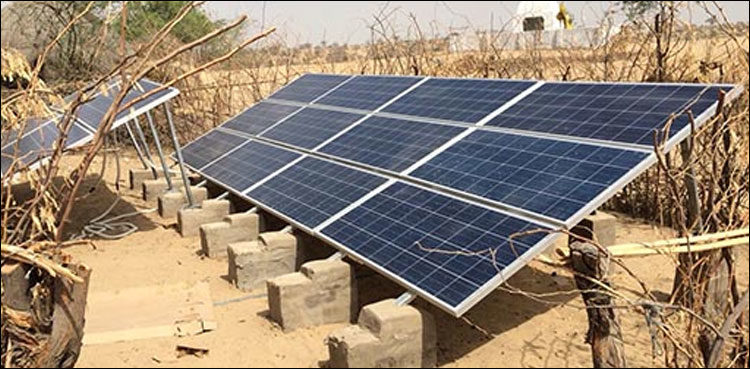


Pakistan’s solar boom protects economy from oil and LNG disruptions
May 8, 2026
The rise of China Three Gorges Corporation (CTG) represents one of the most compelling engineering and industrial success stories of the modern era. Established in 1993, the corporation was entrusted with building the monumental Three Gorges Dam—a project that not only redefined hydropower engineering but also symbolized China’s technological ambition. Today, The CTG has evolved far beyond its original mandate, emerging as a global clean energy powerhouse with operations in nearly 50 countries and an installed capacity exceeding 140 gigawatts.
At its core, the CTG embodies a fusion of engineering precision, financial strength, and disciplined execution. Unlike many energy developers that specialize in limited segments, CTG operates across the full spectrum of the energy value chain. From feasibility studies and environmental impact assessments to financing, construction, grid integration, and long-term operations, the company offers a comprehensive, end-to-end model. This integrated capability allows it to manage risk effectively while ensuring consistency in quality and timelines—two factors that are critical in large-scale infrastructure development.
The company’s engineering prowess is rooted in its experience with complex hydropower systems. The Three Gorges Dam itself remains the largest hydropower station in the world, with a capacity of over 22,500 MW. Constructed under challenging geological and hydrological conditions, the project demanded innovations in turbine design, flood control mechanisms, and sediment management. The lessons learned from this mega-project have since been replicated and refined in CTG’s global ventures, giving it a competitive edge in executing technically demanding projects.
This project holds historical significance as the company’s first international greenfield investment in renewable energy and the first wind power project developed by a Chinese firm in Pakistan. With an installed capacity of approximately 49.5 MW, it became operational in 2014, ahead of schedule. More importantly, it demonstrated that CTG could successfully adapt its engineering and management expertise to foreign environments, marking the beginning of its international expansion under frameworks such as the China-Pakistan Economic Corridor. The CTG’s global journey began with a landmark overseas initiative in Pakistan—the Three Gorges First Wind Power Project.
Countries across Asia, Africa, and Latin America increasingly prefer CTG as a development partner for several reasons. First, the company offers proven technical excellence backed by decades of experience in mega-project construction. Second, its financial model—often supported by Chinese state-backed institutions—enables large-scale investments without placing immediate fiscal pressure on host governments. Through Build-Own-Operate (BOO) or Build-Operate-Transfer (BOT) frameworks, CTG ensures that projects are not only constructed efficiently but also operated sustainably over the long term.
Another critical factor behind CTG’s global appeal is its alignment with the growing demand for clean and renewable energy. As climate change concerns intensify, countries are under increasing pressure to reduce carbon emissions and transition away from fossil fuels. CTG’s diversified portfolio—which includes hydropower, wind, solar, and hybrid systems—positions it as an ideal partner in this transition. Moreover, the company emphasizes environmental compliance, often incorporating ecological conservation measures, resettlement programs, and biodiversity protection into its project designs.
Pakistan, in particular, has emerged as a cornerstone of CTG’s overseas strategy. For decades, the country has faced chronic energy shortages, which have hindered industrial growth and economic stability. The launch of CPEC created a conducive environment for foreign investment in the energy sector, and CTG quickly established itself as a key player. By setting up a localized investment platform, the company ensured smoother coordination with regulatory authorities and better adaptation to Pakistan’s legal and operational landscape.
In the wind energy sector, the company has developed multiple projects, including the Three Gorges First Wind Farm (49.5 MW) and subsequent second and third wind farms with a combined capacity of around 100 MW. These projects, located in the wind corridor of Sindh, collectively contribute approximately 150 MW to the national grid. They not only diversify Pakistan’s energy mix but also reduce dependence on imported fuels, thereby easing pressure on foreign exchange reserves. The CTG’s footprint in Pakistan is both extensive and impactful.
Beyond wind energy, CTG has made significant investments in hydropower, most notably the Karot Hydropower Project. With a capacity of around 720 MW, Karot is one of the largest private-sector hydropower projects in Pakistan and a flagship initiative under CPEC. Built on the Jhelum River, the project incorporates advanced engineering techniques, including roller-compacted concrete dams and high-efficiency turbines. Once fully operational, it contributes substantially to the national grid, providing reliable and low-cost electricity.
The electricity generated by these projects plays a crucial role in stabilizing the power supply. Wind farms produce hundreds of gigawatt-hours annually, while hydropower plants like Karot significantly enhance base-load capacity. This combined output is sufficient to serve millions of households, reducing load shedding and supporting industrial expansion. The CTG’s operational and under development projects in Pakistan exceed 2,600 MW, making it one of the largest foreign investors in the country’s energy sector.
The socio-economic impact of CTG’s projects extends far beyond electricity generation. During the construction phase, these projects create thousands of jobs, providing income opportunities for local communities. In the long term, they contribute to infrastructure development, including roads, transmission lines, and community facilities.
From an engineering perspective, CTG maintains rigorous standards that emphasize efficiency, reliability, and sustainability. The company utilizes state-of-the-art turbines, digital monitoring systems, and predictive maintenance technologies to optimize performance. Its adherence to international safety and environmental standards ensures that projects are not only productive but also socially responsible. The consistent on-time completion of projects reflects a culture of accountability and excellence that distinguishes CTG from many of its competitors.
The CTG is well-positioned to play a leading role in the global energy transition. As countries accelerate their shift toward renewable energy, the demand for large-scale, reliable, and cost-effective solutions will continue to grow. CTG’s integrated model, combined with its engineering expertise and financial capacity, gives it a unique advantage in meeting this demand.
China Three Gorges Corporation stands as a symbol of modern engineering achievement and strategic global expansion. Its journey from constructing the world’s largest dam to becoming a dominant force in international energy markets highlights its technical capabilities and forward-looking vision. In Pakistan, CTG’s contributions demonstrate how international collaboration, backed by engineering excellence and financial innovation, can address critical development challenges. As the world moves toward a more sustainable energy future, CTG’s role is likely to become even more significant, shaping not only infrastructure but also the trajectory of global economic and environmental progress.
Source:https://www.24newshd.tv/22-Apr-2026/meet-power-shortfall-pakistan-moves-towards-sustainable-energy